русский
 日本語
日本語 한국어
한국어 Latine
 Tiếng Việt
 বাংলা
বাংলা ไทย
ไทย عربى
عربى Hrvatski
 dansk
dansk čeština
 Nederlands
 Pilipino
 Suomalainen
 Magyar
 Indonesia
 italiano
 Gaeilge
 Bahasa Melayu
 norsk
norsk فارسی
فارسی Português
 Polskie
 Română
 Slovák
 svenska
 Türk
TürkTiga petikan mendarat di meja yang sama untuk fasad hotel seluas 600 meter persegi: cedar merah barat kering tanur, larch Siberia dan sistem panel komposi...
READ MOREMencari yang profesional dan boleh dipercayai WPC pengilang?
Mencari yang profesional dan boleh dipercayai WPC pengilang?

2026-09-04
Ask an installer what actually ruins a composite deck, and the answer is rarely the board. It is rust streaks bleeding across a light surface, screw heads that strip halfway through the drive, and board edges that mushroom around every fastener. All three failures trace back to one purchasing decision: the screw. The conclusion up front is simple. For outdoor composite wood, the best screws are 316 stainless steel with coarse dual threads and self-tapping tips for coastal, poolside, and high-exposure builds, 304 stainless steel for inland decks, and coated carbon steel only for dry, covered work. The sections below back that up with corrosion data, thread mechanics, and the driving habits that keep boards flat for decades.
Composite wood, usually called WPC, blends wood fiber with polyolefin plastic. That blend is denser than the softwood most screws were designed for, and the plastic portion does not compress the way wood fiber does. A thread profile that bites softwood can simply strip a smooth channel in a composite board. The service environment makes things worse. Where the board meets the joist, moisture sits in a dark, low-airflow gap for days after rain, and any scratch through a plated coating becomes a corrosion cell. Add pool chlorine or coastal salt, and cheap finishes start to fail within a few seasons. Corrosion is not only a strength problem either. As steel rusts, it bleeds dark streaks onto the board surface, so fastener choice shows up in the look of a deck long before it shows up in its structure. If you are still comparing the materials themselves, our guide to what WPC decking is covers the board side first.
Typical salt spray endurance of common screw finishes (hours)
The chart compares typical neutral salt spray endurance for the finishes most often sold for timber and composite fastening. Uncoated carbon steel gives up within days, which is why it never belongs outdoors in a wet climate. Electro-galvanized plating buys a few more weeks, but one scratch through the plating exposes raw steel underneath. Polymer coatings push endurance into the hundreds of hours, yet the coating runs thin at the threads and wears away as the screw cuts through dense composite. Stainless grades do not depend on a coating at all, because their protection is distributed through the metal, so a scratch does not become a rust starter. On a deck that will be walked on and cleaned for twenty years, the difference between 300 hours and 1000 hours is the difference between callbacks and quiet boards.
Screw selection is a corrosion decision first and a thread decision second. Match the grade to the site, and most of the problem is already solved.
Grade 316 adds molybdenum to the alloy, which holds the line against chlorides. For decks near the sea, pool surrounds, marinas, and any board splashed with treated water, 316 is the grade to specify. The fasteners are a small fraction of total board cost, while redoing a stained deck surface costs far more than the screw premium ever will.
Away from salt and chlorination, 304 stainless delivers most of the same corrosion resistance at a lower price. For inland garden decks, balconies, and cladding in moderate climates, 304 composite screws are what most installers should buy in bulk.
Polymer coatings extend the life of carbon steel, but the coating runs thin at the threads and wears as the screw cuts into the board. Reserve coated screws for covered porches, indoor paneling, and temporary structures where standing moisture never reaches the fastener. The table below sums up the matching logic.
| Project location | Recommended screw | Why it works |
|---|---|---|
| Coastal deck, pool surround, marina | 316 stainless, coarse dual thread, self-tapping tip | Resists chloride attack with no coating to wear through |
| Inland garden deck or balcony | 304 stainless composite screw | Adequate corrosion reserve away from salt, at lower unit price |
| Covered porch or indoor paneling | Polymer-coated carbon steel | Dry conditions limit corrosion, and savings add up on large areas |
| Board ends, stairs, heavy-load zones | Stainless face screws | Direct fastening gives the highest withdrawal resistance |
Retained clamping force over ten years of outdoor exposure
This line chart estimates how much of the original clamping force each fastener keeps as outdoor exposure accumulates year after year. Coated carbon steel loses grip fastest, because corrosion roughens and weakens the shank exactly where it bears against the board and the joist. Installers see this curve in practice as deck boards that creak and shift from around year four onward. Grade 304 keeps nearly all of its clamp through a decade in most inland conditions. Grade 316 barely leaves its starting point even where salt air is constant. The vertical gap between the grey line and the two green lines is a maintenance budget a project either pays slowly in labor or avoids entirely.
Corrosion grade tells you whether a screw will still be there in ten years. Thread geometry tells you whether the board will still look flat next month. Three details matter most. First, thread pitch: composite boards need coarse, aggressively angled threads that displace plastic and lock in, while fine machine-style threads strip out under load. Second, the tip: a self-tapping or notched tip cuts through the dense blend instead of pushing material aside, which is what causes mushrooming around the head. Third, the head profile: an undercut or ribbed head seats flush without burying itself, and a driver clutch set low protects both the head and the surface. The chart below shows why thread choice deserves a check before you buy.
Typical withdrawal resistance by thread profile (N)
These columns show typical withdrawal resistance for three thread profiles driven into a composite board fixed over a joist. A fine machine-style thread finds little to grip in a plastic-rich board and pulls out at the lowest load. A standard wood thread performs better, but its pitch was optimized for softwood fiber rather than a dense polymer blend. A coarse composite thread roughly doubles the wood figure, because each turn displaces more material and locks deeper into the board. Higher withdrawal resistance also presses the board tighter to the joist, which cuts creaking underfoot. When you compare fastener quotes, thread specification therefore deserves the same attention as the stainless grade itself.
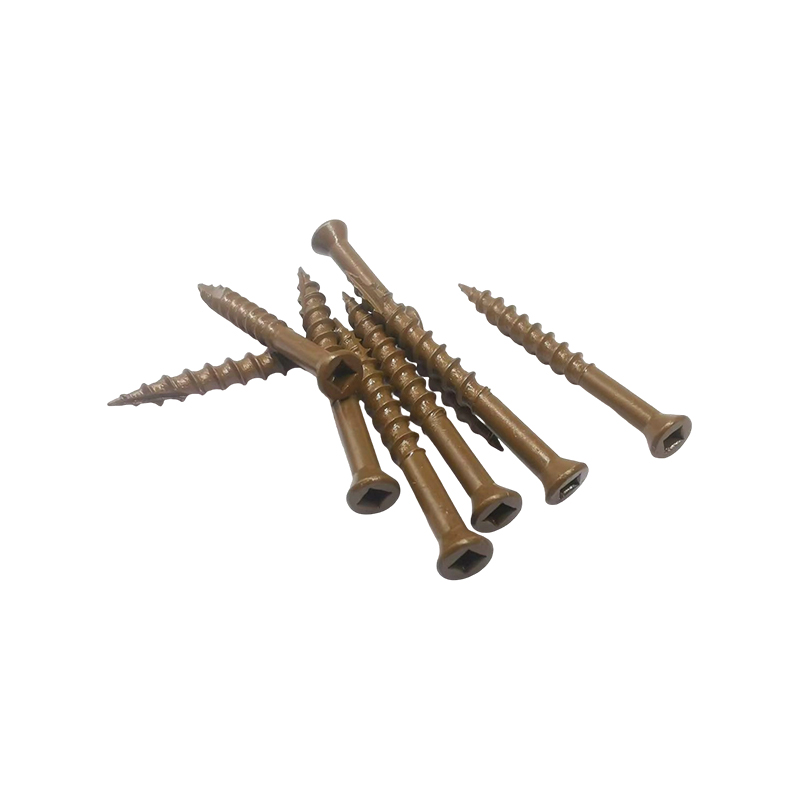 Stainless Steel Self-Tapping Screw for Decking Thread profile drives withdrawal resistance in composite boards, so a coarse composite thread grips far better than standard wood thread. These 304/316 stainless self-tapping screws also press boards tight to joists, cutting creaking underfoot. View Product →
 Face screwing is the strongest and cheapest method per fastener, and it is the right choice for board ends, stair nosings, borders, and zones that carry heavy furniture. Its weakness is cosmetic: even a well-driven stainless head is visible, and a poorly driven one leaves a raised bump. Hidden clip systems take a different route. A stainless clip sits in the side groove of the board, a small screw anchors it to the joist, and the walking surface stays uninterrupted while the board is still free to move sideways as temperatures change. Clips cost more in material and labor, so many projects combine both methods. Remember that a hidden system is only as good as its screws, because a corroded clip screw fails out of sight.
Fastening approaches compared across five factors (score out of 10)
This radar chart scores three fastening approaches on five practical dimensions, with ten as the best mark. The coated steel face screw wins on purchase cost but collapses on corrosion, which is the axis that decides long-term appearance. The 316 stainless face screw scores highest on holding power, which is why it remains the choice for borders, stairs, and heavy furniture zones. The hidden clip system dominates the appearance axis because no fastener heads interrupt the walking surface. Its lower speed score reflects the extra labor of placing a clip at every joist crossing. Many finished decks therefore combine the two: clips across the field of the deck and stainless face screws where loads concentrate.
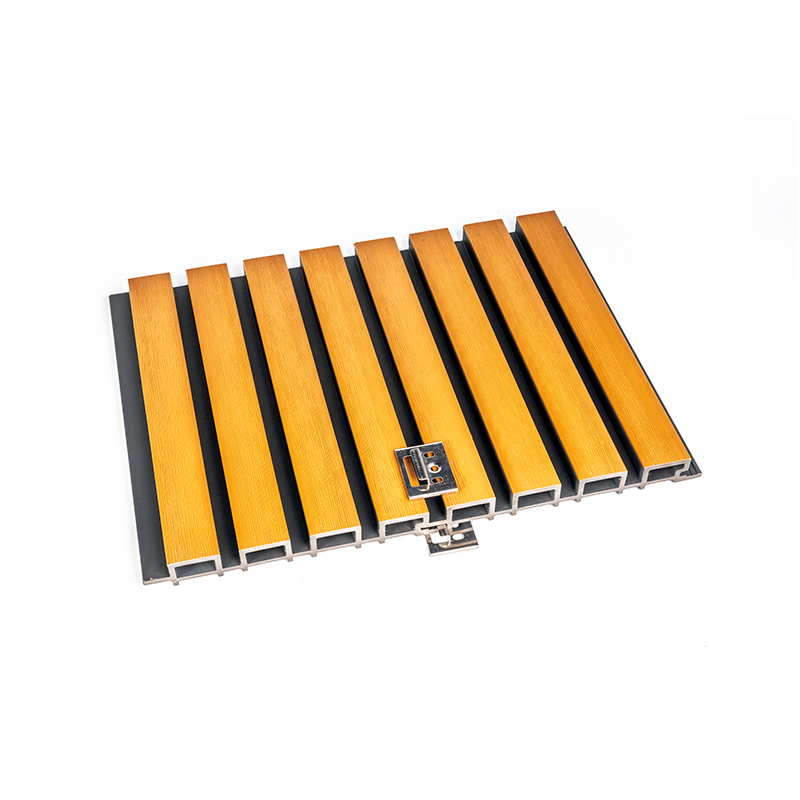 Stainless Steel Hidden Clip for Composite Decking Hidden clips hold boards through the side groove, keeping the walking surface free of screw heads. The radar comparison shows clips win on appearance, so pairing them with face screws covers load-bearing zones too. View Product →
 Even the best screw underperforms when driven carelessly. Drill pilot holes at board ends and within about 15 mm of edges, because dense composite splits and mushrooms where material has nowhere to go. Set the clutch on the driver low and increase gradually until the head seats flush; burying the head crushes the surface and can start a crack. Keep the gaps the board system specifies, typically 4 to 6 mm between boards and more at the ends, so thermal movement never fights the fastener. Finally, make sure every screw lands in a joist rather than in air, and that joist spacing matches the board rating, commonly 350 to 400 mm for residential decking. The same discipline applies to fences and cladding, and our five-step guide to outdoor fence installation and maintenance covers those habits in detail.
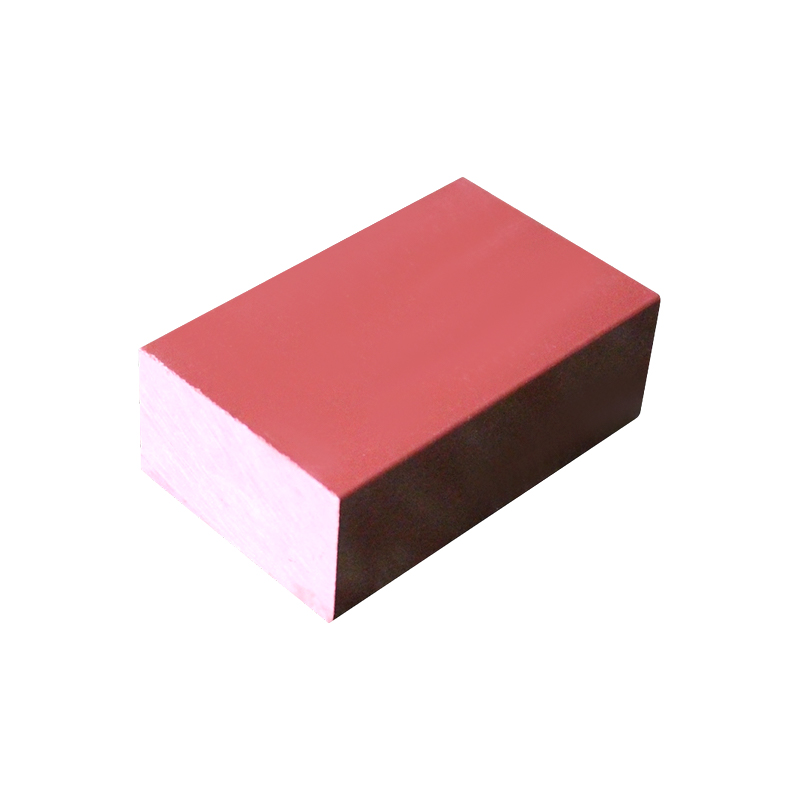 WPC Joist Keel for Flooring and Wall Panels Boards, clips, and screws all perform best when fixed to a proper substructure. This corrosion-resistant WPC keel supports decking and wall panels, and matching joists with fasteners from one supplier keeps the whole system consistent. View Product →
 As a WPC manufacturer that supplies boards, joists, clips, and matching screws as one system, we see the difference these details make on real projects. Specify the grade your site demands, respect the thread, and drive with care, and a composite deck keeps its clean lines long after cheaper fasteners would have streaked it brown.
Tiga petikan mendarat di meja yang sama untuk fasad hotel seluas 600 meter persegi: cedar merah barat kering tanur, larch Siberia dan sistem panel komposi...
READ MOREAsk anyone who has re-laid a failed deck and the same stories return: rows of screws that rusted and streaked pale boards, butt joints that closed up on a...
READ MOREKebanyakan masalah pelapisan berpunca daripada keputusan yang dibuat sebelum satu panel mencapai dinding: substruktur tanpa jurang pengudaraan, permukaan ...
READ MOREAsk an installer what actually ruins a composite deck, and the answer is rarely the board. It is rust streaks bleeding across a light surface, screw heads...
READ MOREPelapisan dinding WPC biasanya berlangsung antara 20 dan 30 tahun apabila dipasang dan diselenggara dengan betul, prestasi pelapisan ka...
READ MORE